Where Do They Go When They're Gone?
- goodflightwebdev
- May 2
- 5 min read
Life after mom goes to the assisted living facility

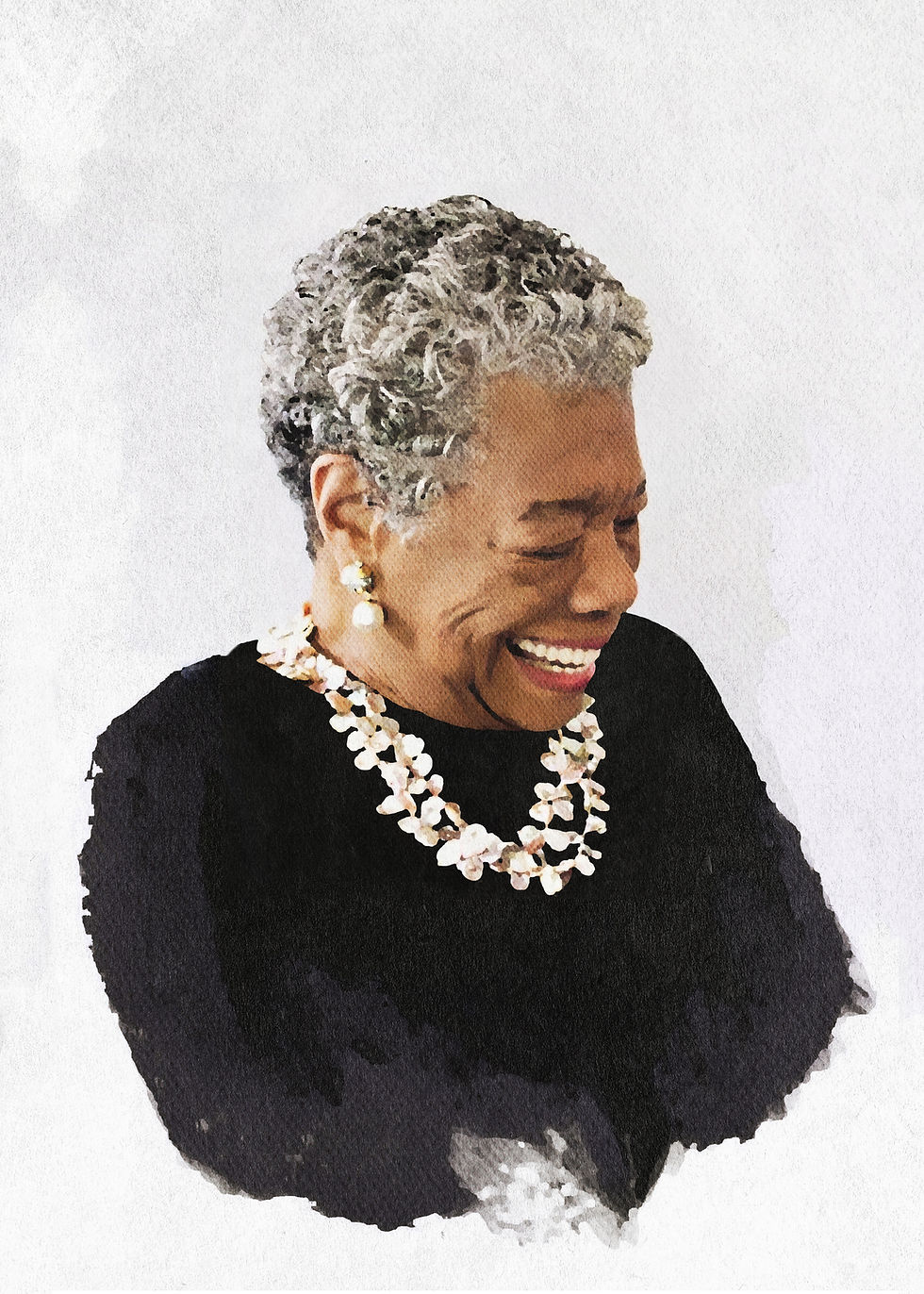
I was eleven years old when I saw Maya Angelou speak.
She came to Millersville University on a February evening in the early 1980s and filled the auditorium to capacity. I was 11 and I did not want to be there but my mother knew it was important, and she took me. Maya was amazing in the way that people are amazing when they know their worth and own their own space. She was funny. She was proud. She read poetry and told stories and sang, and the room laughed and applauded and went quiet in all the right places. She may not have actually sung but it felt like she did, so to me, she sang.
I do not remember everything she said that night. I was eleven, and memory is not that faithful, and it was a long time ago. But I do remember how I felt in that room. I remember the quality of attention she commanded. I remember thinking, without having words for it yet, that this is what it looks like when someone tells the truth out loud and the room recognizes and shares that truth. I remember my mother’s joy sharing something she had always valued with her biracial daughter.

Maya told the students that night: “Poetry says, ‘Someone was lonely before you. Someone was humiliated before you. Someone was hurt before you. And someone has survived.’”
There is another quote that came to me, years later in a training that helped me work with my clients who had dementia; “I’ve learned that people will forget what you said, people will forget what you did, but people will never forget how you made them feel.”
It is a beautiful and hard statement. It has also been repeated so many times and it’s so true people can hear it acknowledge it, know the truth and move on before they consider their own actions, and values. I want it to repeat it here, because the science underneath it is genuinely remarkable, and because the clinical implications are present, the way people feel about you affects every relationship you have.
Emotional memory and episodic memory are stored differently in the brain. Episodic memory, the kind that holds the specific content of events, what was said, what happened, the sequence of things, lives primarily in the hippocampus. Emotional memory, the felt sense of an experience, lives primarily in the amygdala and the broader limbic system.
These systems don’t degrade at the same rate.
In dementia, the hippocampal systems responsible for explicit memory formation are often the first to be compromised. A person with moderate to advanced Alzheimer’s disease may not be able to tell you what happened this morning. They may not remember your name. They may not recognize your face, but their amygdala is still taking notes.
The felt sense of the interaction, whether it was warm or frightening, whether they felt safe or confused, whether the person in front of them seemed calm or distressed, that registers and their feelings will last longer than the specific memories.
Tom Kitwood, whose personhood-centered approach transformed dementia care, built an entire clinical framework on this reality. He argued that people with dementia remain persons with emotional and relational needs, the need to feel seen and safe and valued. The specifics of the interaction may not be remembered but the quality of it is. That sentiment started with Angelou.
I see this information more broadly than just as care for people with dementia. It is true across a wide range of conditions that compromise explicit memory while leaving emotional memory relatively intact. A partner in a psychiatric crisis may not be able to give you an accurate account of what happened in an argument, nor would a child with significant cognitive disability. They may not retain the sequence of the afternoon just as a loved one coming out of a dissociative episode may have fragmentary recall of what was said, but in every case, the nervous system was taking notes. The felt sense of the interaction is in the body, it does not require conscious memory to have an effect.
“So what? How does all of this matter in my day to day life?”
How you show up matters even when it is not consciously received. The warmth you bring to a hard interaction is landing somewhere, even when the person cannot acknowledge it. The groundedness you maintain when everything in you wants to brace or withdraw or go flat is doing something real at a level below language. The care you provide is not wasted because it was not thanked and it’s not invisible because it was not remembered. It registered and is in there somewhere, in the felt sense of the relationship, in the accumulated emotional residue of a thousand interactions that the person may not be able to name but is nonetheless shaped by.
I work with clients who are caregiving for someone they love, someone whose condition limits what they can give back. They are doing something genuinely hard and seeing very little external evidence that it matters. In the past they have ask me, quietly, whether any of it makes a difference since the person cannot even tell.
It makes a difference.
We have the poetry of Maya Angelou, Kitwood specific with dementia care, and Boss who give words to the grief the comes from ambiguous loss. Your grounded kindness helps them to co-regulate, and helps you remember yourself in these difficult relationships.
Someone was lonely before you. Someone loved someone with dementia before you. Someone tried to stay warm and present in something impossible before you. And someone survived.
You will do more than survive, if you do this work with intention. You will leave an emotion in every interaction that the person you love may not be able to articulate but will carry regardless. They will have a felt sense of safety and a sense of warmth. They will know that you help them feel safe.
It’s important and humanizing in the lives of people whose explicit memory is compromised and whose world has become uncertain and frightening, having that felt sense of safety is everything.
How you make them feel is the whole thing.
Angelou knew it while the neuroscience confirms it, and you, in the room with someone whose capacity is limited, who do the hard work of staying present without losing yourself, are living it.

I was eleven years old in that auditorium and I did not yet have the language for what I was watching. I have it now. She was demonstrating, in real time, what it looks like to be fully present in a room and help people co-regulate and to make every person there feel that they had been seen.
We didn’t forget how she made us feel.
Neither will the person you love, whatever else they forget.
-Lisa Timberlake
The Blue Mistflower Coach
Let's Connect! Sign up for our weekly newsletter here!
Instagram/BlueMistflowerCoach
Medium/BlueMistflowerCoach
Digital illustrations courtesy of Alex London @CorvusCrux


Comments